Automated flow control systems expand the discharge strategies available within detention design.
While conventional outlet structures rely on fixed head-dependent discharge relationships, adaptive control systems allow real-time discharge shaping in response to measured storage conditions and storm behavior.
This expands the hydraulic performance envelope of the detention system and can meaningfully influence required storage volume in both retrofit and new development applications.
Why Adaptive Discharge Matters
Detention volume is governed by discharge behavior.
Static outlet structures concentrate control near design head and cannot respond to variability in storm intensity or antecedent conditions.
Adaptive systems introduce logic-based discharge shaping, allowing flow to be managed across a broader operating range — not just at peak design elevation.
Case Studies
Retrofitting Existing Ponds
A municipal retrofit project expanded effective storage utilization by over 25%, allowing compliance with updated stormwater regulations without expanding basin footprint.
New Development Optimization
In a new commercial development, adaptive outlet strategy reduced required detention volume by approximately 30%, reducing excavation depth while maintaining downstream discharge targets
How Automated Controls Work
Adaptive control systems integrate level sensing, telemetry, and logic-based actuation to manage discharge in real time.
Core System Architecture
- Level sensors (ultrasonic or pressure)
- Remote telemetry and control interface
- Cloud-based logic control
- Actuated valve assembly
Typical Workflow
- Monitor rainfall and water level
- Predict required detention and release timing
- Adjust valve position to maintain optimal outflow
- Log performance data for reporting and optimization
These data-driven systems allow municipalities and engineers to retrofit existing basins or design smaller new ones that respond to actual conditions rather than assumptions, improving both hydraulic efficiency and lifecycle value.
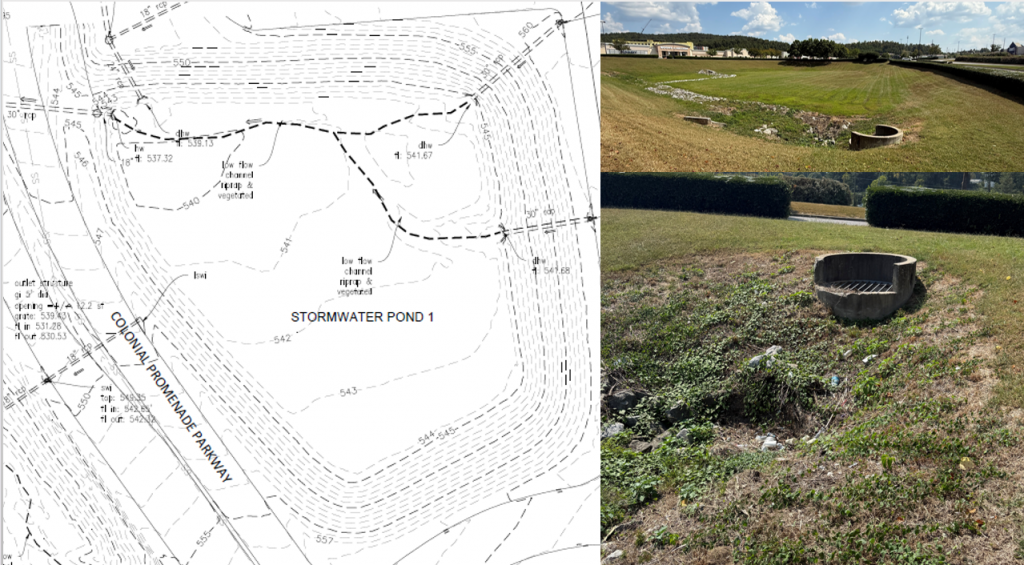
Featured Project: District 31 – Alabaster, AL
The District 31 retrofit replaced conventional outlets in three existing ponds with automated outlet structures (AOS).
By dynamically matching real rainfall and storage conditions, the retrofit improved discharge timing, reduced peak water surface elevations, and enhanced post-storm drawdown efficiency—without expanding pond footprints.